
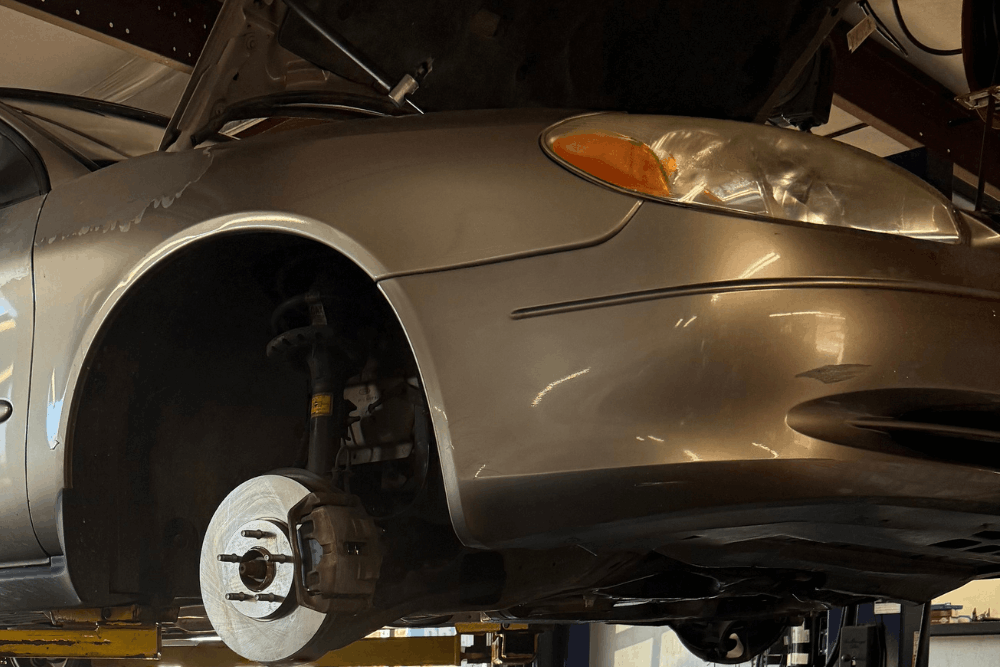
You back out of the driveway on a cold Republic, MO morning, and something sounds different. A squeal. A soft pedal. A pull to the left. Winter has a way of turning small brake issues into urgent ones, and most drivers never see it coming. Common winter brake problems like rotor corrosion, caliper seizure, contaminated brake fluid, and road salt damage develop quietly until the road demands a response.
In this guide, you will learn what causes these issues, how to spot the warning signs early, and when it is time to call in an ASE-certified technician at Yocum Automotive to make sure your stopping power is where it needs to be.
What Winter Does to Brakes in the Ozarks
Most drivers assume brake wear is gradual and predictable. Winter changes that. The combination of temperature swings, moisture, and road treatment chemicals creates stress on brake components that simply does not happen the rest of the year.
Here is what is working against your brakes right now:
- Moisture and ice: Sitting overnight in freezing temperatures causes surface rust to form on rotors faster than most people realize
- Road salt and brine: MoDOT treatments keep roads clear but cling to calipers, brake lines, and rotor edges, accelerating corrosion
- Cold brake fluid: Fluid that has absorbed moisture over time behaves differently in the cold, affecting pedal feel and hydraulic response
- Temperature swings: Repeated freeze-thaw cycles expand and contract brake hardware, loosening components over time
- Frozen parking brake cables: Wet cables exposed to a sudden freeze can lock in place overnight
Understanding what is happening underneath your vehicle is the first step to catching problems before they become dangerous.
The Winter Brake Warning Signs You Should Not Ignore
That Squealing Sound in the Morning
A light squeal during your first few stops on a cold morning is usually surface rust burning off the rotor. That is normal. What is not normal is squealing that continues through your entire commute or returns every time you slow down. Persistent squealing typically points to worn brake pads making contact with the rotor wear indicator. That sound is intentional. It is designed to get your attention.
Grinding When You Brake
Grinding is the next level after squealing, and it is not something to ignore. Metal-on-metal contact means the brake pad material is gone, and the backing plate is now meeting the rotor directly. The longer this continues, the more damage it causes to components.
A Soft or Spongy Pedal
If your brake pedal feels like it is giving way more than usual or sinking closer to the floor, brake fluid is often the issue. Brake fluid absorbs moisture over time, and in cold weather, that moisture affects how the hydraulic system responds. Air in the brake lines can cause the same symptom. Either way, a soft pedal in winter deserves a prompt inspection.
Pulling to One Side
When one brake is doing more work than the other, your vehicle will pull toward that side under braking. In winter, this usually comes down to a sticking or partially seized caliper. Cold temperatures reduce the mobility of caliper pistons, especially on vehicles that have not had recent brake service. On slick roads in the Ozarks, uneven braking is a serious safety concern.
The Road Salt Reality for Southwest Missouri Drivers
Road salt is one of the quieter threats to your brake system. It does not cause immediate, dramatic failure. Instead, it works slowly, building up on surfaces and accelerating corrosion over weeks and months.
Here is a straightforward look at what salt exposure does to each brake component over time:
| Brake Component | How Road Salt Affects It | What You Might Notice |
|---|---|---|
| Rotors | Pitting and surface corrosion | Vibration, uneven braking |
| Calipers | Seized pistons or slides | Pulling, uneven pad wear |
| Brake Lines | External rust and eventual leaks | Soft pedal, fluid loss |
| Brake Hardware | Corroded brackets and clips | Squealing, reduced pad contact |
| Parking Brake Cable | Freezing or sticking | The cable fails to release |
Regular underbody rinses after driving on treated roads help, but they are not a substitute for having the brake system physically inspected by a technician who can see what is building up underneath.
Winter Brake Myths Worth Clearing Up
There is a lot of brake advice floating around that sounds reasonable, but can lead drivers in the wrong direction. A few worth addressing:
- Myth: If the brake light is not on, the brakes are fine. The brake warning light monitors specific system conditions like fluid level or pressure. It does not tell you whether your pads are worn, your rotor is pitted, or your caliper is sticking.
- Myth: Brakes only need attention when something sounds wrong. By the time you hear grinding, the damage is already done. Many brake problems in winter develop without much noise at all, especially corrosion-related issues and fluid degradation.
- Myth: Surface rust after rain or snow is always harmless. Light rust that clears up within a few stops is generally fine. But if you notice persistent rough braking, vibration, or pulsing even after driving several miles, that rust may have gone deeper into the rotor surface.
- Myth: Pumping the brakes warms them up faster in cold weather. This does not help and can create uneven rotor wear. Let your vehicle warm up normally and ease into your first stops on cold mornings.
Is It Time for a Brake Inspection? Here Is a Quick Self-Check
Not sure if your brakes need attention? Run through this list before your next drive:
- Listen: Any squealing, grinding, or scraping during normal stops?
- Feel: Does the pedal feel soft, low, or inconsistent compared to usual?
- Look: Is the brake warning light on or flashing?
- Notice: Does the vehicle pull to one side when you brake?
- Think: When was the last time your brakes were professionally inspected?
If you answered yes to any of the first four or cannot remember the last inspection, it is worth scheduling a brake check before winter’s end.
How Yocum Automotive Approaches Brake Repair in Republic, MO
Bringing your vehicle in for brake service at Yocum Automotive is not a guessing game. The process is transparent from the moment you drop off your keys.
Here is what that looks like:
- Full brake system inspection: Pads, rotors, calipers, brake fluid, lines, and hardware all get checked by our ASE-certified technicians
- Digital Vehicle Inspection (DVI): Results are sent directly to your phone with photos so you can see exactly what was found
- Follow-up call: A service advisor walks you through the findings in plain language, no pressure, no jargon
- Your decision, your timeline: We give you the information you need to make a confident, informed choice about next steps
- 12-month/12,000-mile warranty: Covers parts and labor on completed brake repairs
- Loaner vehicles and shuttle service: Available so your day stays on track while your vehicle is being serviced
- Synchrony financing: For repairs that need to happen now but need some flexibility
- AAA Approved Auto Repair Facility and BG Products Certified Shop: Credentials that reflect our commitment to quality, honesty, and professional service
We service domestic and Japanese vehicles, including Ford, GM, Dodge, Honda, Toyota, Kia, Hyundai, Nissan, Subaru, Mazda, and more. Drivers from Republic, Clever, Willard, and Battlefield trust us to be straight with them, and that is exactly what we deliver every time.
Frequently Asked Questions About Winter Brake Problems
Why do my brakes squeal more in cold weather?
Cold temperatures cause surface rust to form on brake rotors overnight, leading to squealing during the first few stops of the day. If the noise persists beyond your initial drive, worn brake pads or damaged rotors may be the cause and should be inspected promptly.
Can freezing temps affect brake performance?
Yes, freezing temperatures can thicken brake fluid, cause calipers to stick, and allow surface rust to develop on rotors, all of which reduce braking efficiency. Scheduling a brake inspection before or during winter helps ensure your system performs reliably in cold conditions.
What causes a soft brake pedal in winter?
A soft or spongy brake pedal in winter is often caused by moisture-contaminated brake fluid or air in the brake lines. Both conditions reduce hydraulic pressure and can compromise stopping power, making it important to have the system inspected as soon as possible.
How often should brakes be checked in winter?
Brakes should be inspected at least once a year, and more frequently if you drive in heavy snow, ice, or on salted roads. A mid-winter inspection is a practical way to catch wear and corrosion before they become safety issues.
Does road salt damage brake components?
Yes, road salt accelerates corrosion on rotors, calipers, brake lines, and hardware. Over time, salt exposure can lead to pitting, seized calipers, and brake line deterioration. Regular inspections and underbody rinses help protect your brake system through the winter months.
Schedule Your Brake Inspection in Republic, MO at Yocum Automotive
Winter brake problems do not fix themselves, and waiting tends to turn a simple pad replacement into a rotor and caliper job. If something feels off or it has simply been a while, now is the right time to have it checked.
Schedule your brake inspection today or call us at 417-732-6430. Visit us at 906 US Hwy 60 East, Republic, MO 65738. Proudly serving Republic, MO, Clever, MO, Willard, MO, Battlefield, MO, and the surrounding Southwest Missouri area. We are auto-motivated to keep you and your family stopping safely all year long.